Sleeves, Labels, and the Long Life of a Negative
A clear labeling and storage routine makes film negatives easier to identify, handle, and revisit. Learn how to avoid common filing problems and build a simple archive that stays useful.
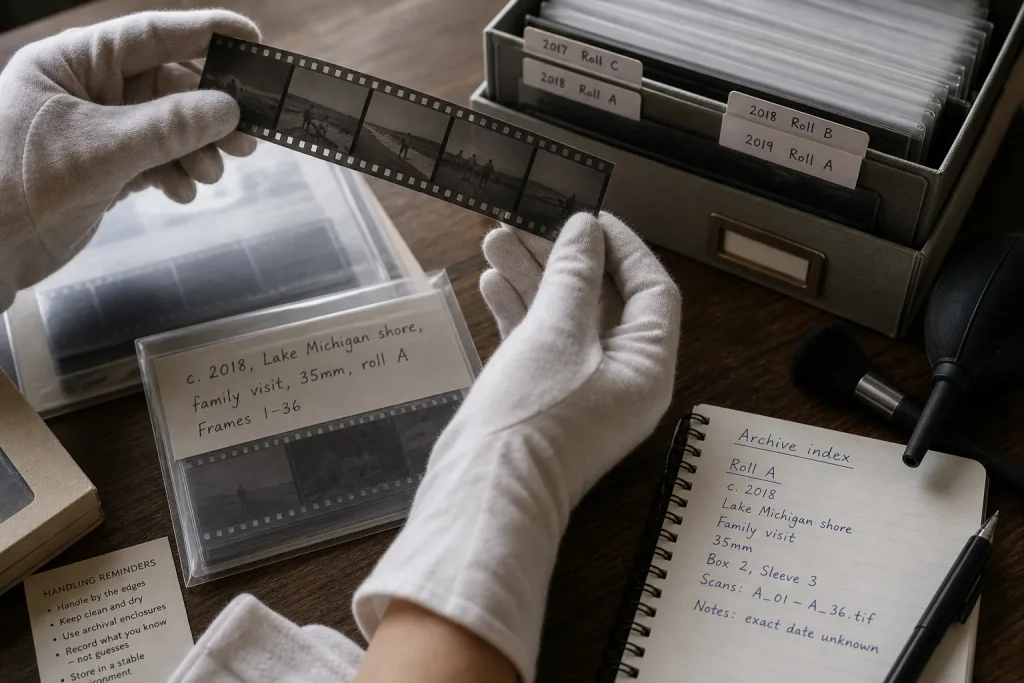
You pull a negative sleeve from a box, hold it up to the light, and find a strip with no date, place, or clue about its roll. A few steady habits—careful handling, readable labels, and a filing order you can keep—can prevent that small mystery from multiplying across a collection.
Handle film gently
Work on a clean, dry surface, away from food, drinks, and open ink. Hold negatives by their edges with clean, dry hands, and do not force a curled strip flat. If the film is difficult to support, pause rather than pressing it against the table.
Choose enclosures specifically intended for photographic film, and follow the manufacturer’s guidance for the material and format. Archival suitability depends on the enclosure’s composition and condition, as well as where it will be stored. Avoid PVC and unknown plastics. If you are unsure whether an old sleeve is suitable, consult a photo conservator or qualified archival supplier before moving the negatives.
For loose dust, a clean blower made for camera equipment may help. Avoid canned air and do not wipe the film with cloth or household tissue. Sticky residue, suspected mold, or other damage is a reason to stop handling the strip and ask a conservator or photo lab experienced with film for advice.
Write useful labels
A label such as “summer” may feel clear today and mean little later. Record details that help identify a roll: an approximate date, place, subject or event, format, and a roll identifier. Add names only when you know them. “Unknown beach” is more useful than a confident but unsupported guess.
Write in the enclosure’s designated label area, using a marking tool the enclosure maker recommends. Keep marks off the film, avoid adhesive labels on the sleeve, and let writing dry before stacking. If you need to correct a label, retain the earlier clue when practical and mark uncertain details as uncertain.
Say you have a roll from a family visit, but cannot pin down the day. Start with the known details: the visit was around 2018, the location was the Lake Michigan shore, and the roll is 35mm. Write “c. 2018, Lake Michigan shore, family visit, 35mm, roll A” on the sleeve. The resulting label identifies the place, approximate time, format, and roll without pretending to know the exact date.
Keep rolls together
During cutting or scanning, strips from different rolls can get mixed up. Keep each roll’s sequence together and put its identifier on every enclosure used for it. If a strip has already become separated from its original group, record the known details and mark missing information rather than assigning it to a roll based only on resemblance.
Cut film only when your storage or scanning workflow requires it. Preserve frame edges and any leader information that may help identify the film. Use enclosures intended for the film’s format; do not fold or force unusual sizes into a standard sleeve.
Not every frame needs a caption. A roll-level description and frame number often provide enough context. Give extra attention to images whose people, place, or event might otherwise be hard to recognize.
Build a findable archive
Choose a filing order you can maintain, such as year followed by roll ID, or a stable sequence of roll IDs linked to an index. Use boxes and enclosures intended for photographic materials, and follow their suppliers’ storage and handling guidance. Keep the arrangement simple enough that a new roll has an obvious place.
A notebook or digital index can echo the sleeve labels: include the roll ID, known date or date range, location, subjects, format, box or sleeve location, and related scan filenames. Use filenames linked to the roll ID and frame number instead of relying on a folder called “old scans.” If you use a digital index, keep a backup; physical labels should still make sense if the index is unavailable.
If you have conflicting notes or an uncertain date, preserve both clues and mark the uncertainty in the index. Give unidentified rolls neutral IDs and file them in a clearly marked group rather than guessing their chronology.
Choose storage carefully
Keep negatives away from direct sunlight, radiators, attics, basements, plumbing, and places with damp or changing conditions. The right storage choice depends on the condition of the film, its enclosure, and the environment. For a valuable or visibly deteriorating collection, ask a photo conservator or qualified archival professional to assess suitable storage rather than relying on a general rule.
Keep boxes clean and protected from accidental spills. Avoid packing them so tightly that enclosures buckle, and do not leave loose strips free to slide around. If you notice a vinegar-like odor, unusual stickiness, or visible mold, limit handling, separate affected material from other negatives if you can do so without disturbing it, and seek professional advice.
What is not worth the effort: decorating every sleeve, inventing elaborate codes you will forget, or repeatedly handling negatives just to admire them. A clear identifier and a brief, honest description make future access easier without adding needless handling.
Respond to problems
If writing smears, check whether the marking tool was suitable for the enclosure and whether it had dried. Do not add more ink over the mark. Ask an archival supplier or conservator how to transfer the information safely if the label needs replacing.
If sleeves stick together, do not pull them apart sharply. Stop and seek advice from a conservator, especially if the film itself seems tacky or damaged. When labels conflict, retain each clue and note the disagreement; when a roll cannot be identified, use a neutral ID and describe only what is known. That leaves the archive useful without turning uncertainty into a false certainty.
Frames in the same light
Contact Sheets as a Map of a Roll
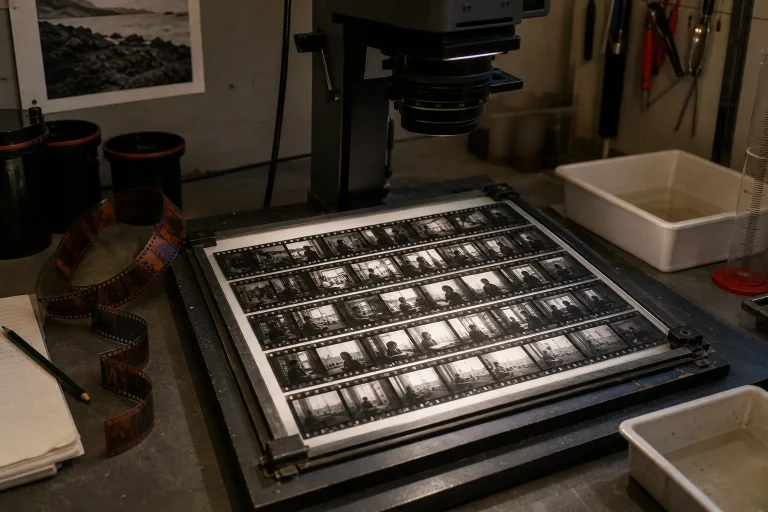
A contact sheet turns a strip of negatives into a readable sequence, helping you compare frames,…
Reading a Sunny Scene Without Letting the Meter Decide
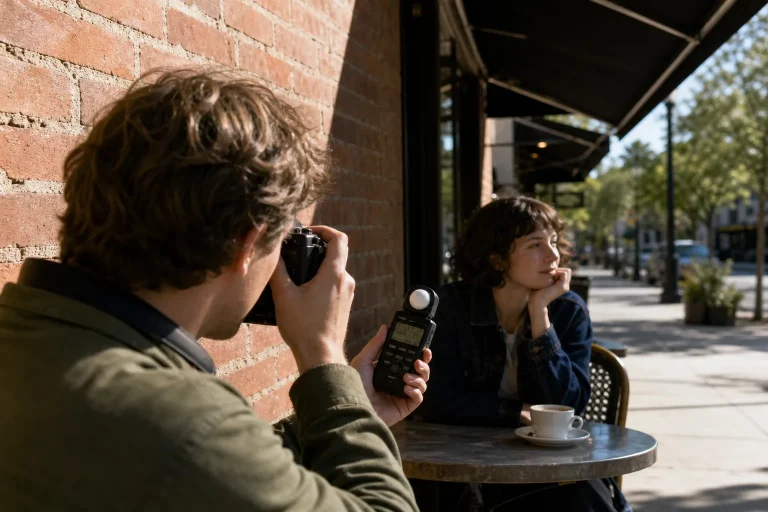
Learn to read bright areas, deep shade, and the subject’s place in the light before choosing…